
East Meets West!
In 1582, Father Matteo Ricci, SJ, became the first missionary to bring Christianity to mainland China. Over 400 years later, two Regians set out for China and its secondary schools as missionaries of the Latin language.
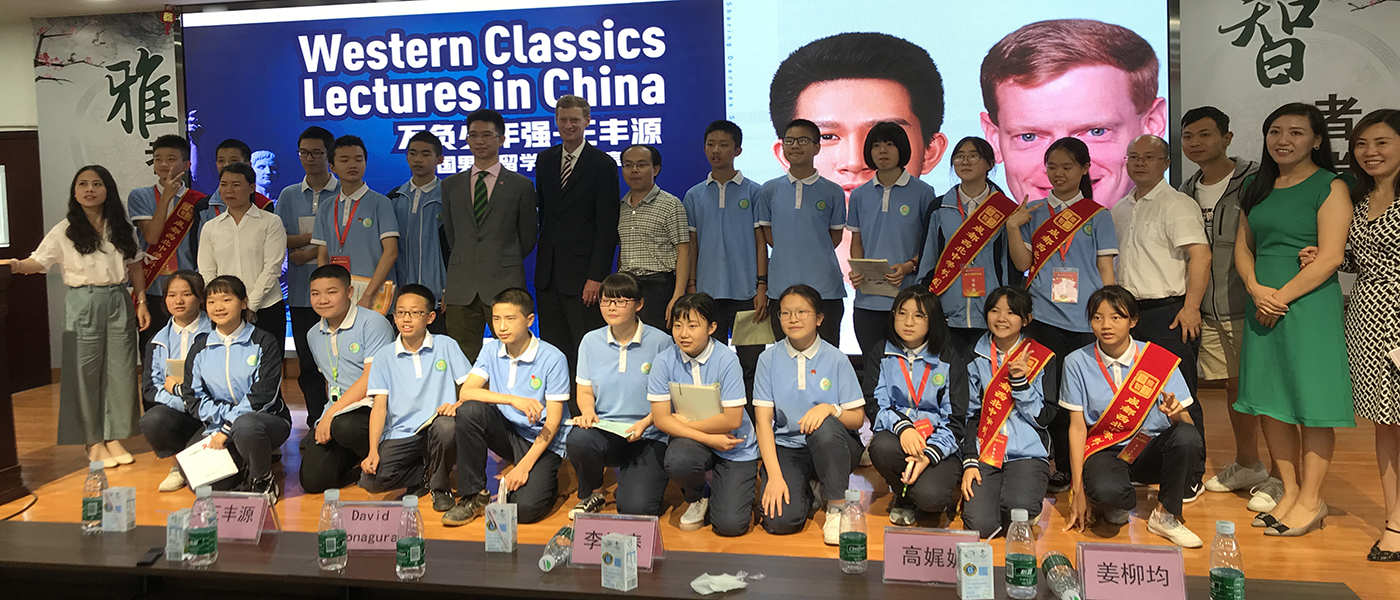
Fengyuan (Francis) Wang 鈥�20, inspired by his love for Latin, conceived and coordinated 鈥淲estern Classics Lectures in China鈥� to inspire Chinese secondary schools to offer Latin in their curricula. To help showcase the West鈥檚 classical language, Wang invited 麻豆视频 Latin teacher Mr. David Bonagura 鈥�99 to assist him in this brand new endeavor.
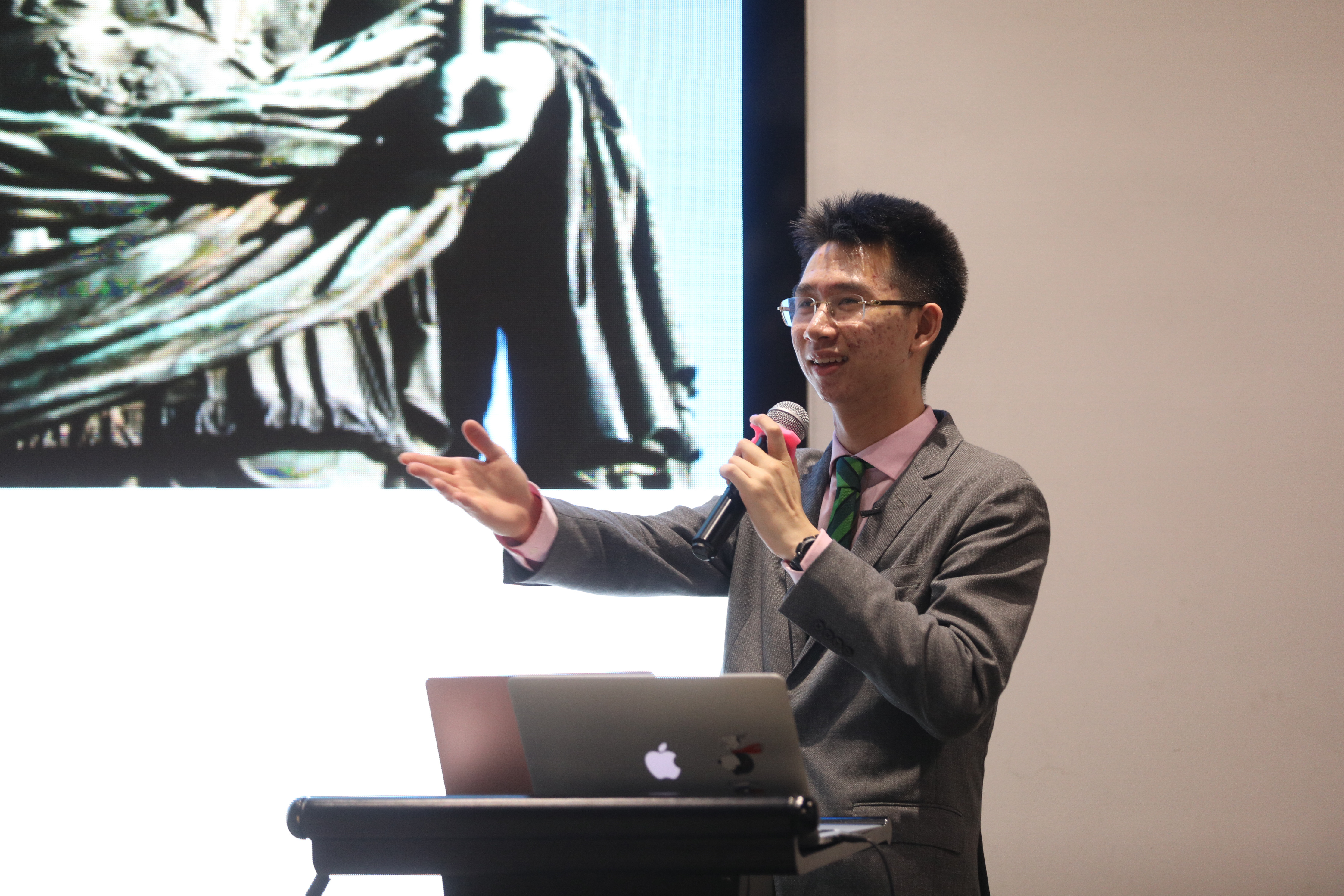
Visiting four schools in three cities from June 24-26, 2019, Wang began each presentation recounting his own study abroad experience. Born and raised in China, Wang came to the United States at age 11 with limited facility in English to begin his studies at the Fessenden School in Massachusetts. Wang persevered through a difficult adjustment period to have a wonderful career at Fessenden. Before matriculating at 麻豆视频, Wang detailed his experiences in a book entitled The Zeal in Youth, which has sold widely in China.
At 麻豆视频, Latin quickly became Wang鈥檚 favorite subject, which he has pursued eagerly outside the classroom through two trips to Rome, participation in a spoken Latin conference in New York City, and working as a research assistant for a classics professor at Stanford University. Through these experiences he also realized that his peers in China, for whom Latin is completely unknown, could come to learn and appreciate Western culture by studying Latin.
鈥淎fter several years studying in the U.S., I acquired a strong desire to play some role in connecting the west to the east,鈥� Wang said. 鈥淭eaching Latin in China to children who otherwise would have no chance to know Latin is only a small step, but each one contributes to the greater goal, which is to connect cultures and people on other sides of the world. My belief is that the more we know each other, the less misunderstanding will exist between countries.鈥�
The hundreds of students and parents who heard Wang鈥檚 presentations had to be surprised when he introduced them to his favorite subject. He briefly explained what Latin is and where it came from, and made some connections to Latin that his audiences would know: Julius Caesar, the Veritas insignia of Harvard University, and Vivo electronics. He then introduced Bonagura for demonstration lessons on the Latin language.
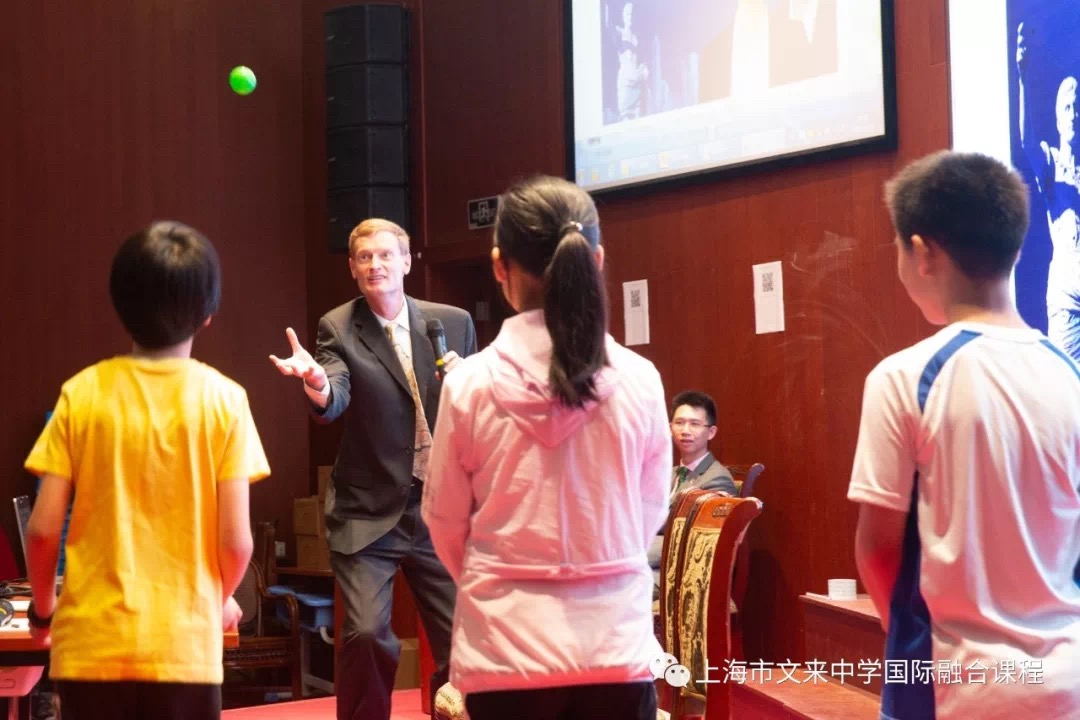
Using the spoken Latin techniques that he has developed in the 麻豆视频 classroom, Bonagura selected 鈥渄iscipuli conscripti鈥� from the audience to demonstrate briefly the nature of Latin imperatives, Latin nouns in the nominative and accusative cases, and Latin counting. The students and parents laughed as they watched the conscripti respond to Bonagura鈥檚 Latin speaking, which was accompanied by a full range of gestures to clarify meaning. In exercises of 鈥渓earning by doing,鈥� the audiences encountered the Latin verbs for walk, run, sit, stand, stop, and throw. This last verb they learned by throwing a ball on the stage: 鈥淚ace pilam ad me!鈥�
At two schools, the principal was pulled from the audience to participate in the final demonstration: pulling ten coins from a sacculus, or bag. 鈥淯nus nummus e sacculo! Duo nummi! Tres nummi!鈥�
Bonagura relished this unique teaching experience. 鈥淭o see Chinese students and parents genuinely interested in the Latin language, and responding eagerly to the Latin that they saw acted out in front of them, was another sign of Latin鈥檚 enduring, immortal character,鈥� he reflected. 鈥淭heir excitement also testifies to the value of teaching Latin as a living language rather than as one solely to be read from a page.鈥�
The presentations were a big success. Student enthusiasm for Latin was palpable, and two schools, the Beijing Royal School and Chengdu Foreign Language School, are now exploring the possibility of offering Latin in the immediate future. A few parents also expressed interest in having their sons apply to 麻豆视频!
Wang hopes to return to China next summer to help the schools he visited lay the groundwork for establishing their own Latin programs and to promote Latin at a few new ones. Both Wang and Bonagura were humbled to walk a similar path to Father Ricci, about whom they were reading during their travels between cities.
鈥淩icci鈥檚 genius was to present Christianity in a way that the Chinese could understand,鈥� Bonagura said. 鈥淥ur goal was to present Latin in the same manner. If students in China can learn Latin, they can then come to learn the heart of Western Civilization, of which Christianity is an integral part.鈥�
Read more 麻豆视频 news